Step into the open-air museum of Vijayanagara, where sprawling ruins and sacred riverbanks tell the tale of a golden era.
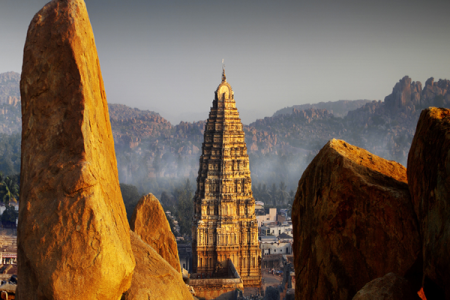
The recently formed Vijayanagara district encompasses Hampi, the UNESCO World Heritage site and former capital of the Vijayanagara Empire. Among the evocative ruins are the Virupaksha Temple, Vittala Temple with its musical pillars, royal enclosures, bazaars, and colossal stone chariots. The Tungabhadra River winds through this ethereal landscape, adding to its mystical allure. Beyond Hampi, the district includes rural villages preserving traditional crafts and folklore. Vijayanagara is an immersive journey into Karnataka’s imperial past, ideal for heritage explorers, artists, and photographers.
Step into a colossal open-air museum where ancient boulders echo with royal footsteps, temple bells, and the vibrant pulse of a lost empire. Vijayanagara is more than a place—it’s a poetic remnant of one of India’s most glorious civilizations.
The Vijayanagara district, carved from the historic Ballari region, is a tribute to one of South India’s most powerful empires. At its heart lies Hampi, the breathtaking UNESCO World Heritage Site, which once served as the prosperous capital of the Vijayanagara Empire (1336–1565). Spanning across surreal landscapes of gigantic boulders, banana plantations, and sacred riverbanks, Hampi and its surroundings offer a mystical blend of mythology, art, architecture, and history that few destinations in the world can match.
As you enter the ruins of Vijayanagara, you are transported back to a time when this empire rivaled Rome and Constantinople in wealth and grandeur. The Virupaksha Temple, dedicated to Lord Shiva and still in active worship, towers with exquisite carvings and gopurams that touch the skies. Walk further and you’ll find the Vittala Temple, home to the legendary musical pillars—each one capable of producing a unique note when gently tapped—and the iconic stone chariot, an architectural marvel etched with mythological scenes and divine motifs.
The Royal Enclosure, once the nerve center of imperial administration, unveils awe-inspiring structures like the Mahanavami Dibba, a ceremonial platform from where kings once watched festivities; the Pushkarani (stepped tanks), and the Queen’s Bath, showcasing Indo-Islamic influences with elegant arched corridors and water management systems.
The city’s layout reflects advanced urban planning and spiritual harmony. From Achyutaraya Temple to Sasivekalu Ganesha, from Hazara Rama Temple adorned with thousands of Ramayana panels to Hemakuta Hill where you can witness one of the most dramatic sunrises in Karnataka—the district offers a multi-sensory spiritual and visual experience.
The Tungabhadra River, considered sacred, flows gently through this landscape, adding a serene rhythm to the timeless stone structures. Coracle rides, riverside meditation, and rituals at bathing ghats connect travelers with centuries of devotion and tranquility.
Beyond Hampi, the Vijayanagara district is rich in living heritage. Small villages like Anegundi, believed to be the monkey kingdom of Kishkinda from the Ramayana, still preserve ancient storytelling traditions, temple rituals, and craft forms like banana fiber weaving and traditional music. The rural landscapes are dotted with sunflower fields, sacred groves, and timeworn shrines, offering a slower, reflective pace to the traveler.
The district is also an evolving hub for photographers, heritage researchers, painters, and spiritual seekers, many of whom return year after year drawn by the haunting beauty of ruins bathed in golden light. Local guides, some of whom are generational caretakers of Hampi’s lore, bring stories to life—of kings and poets, of invaders and resilience, of gods who once walked the earth.
Festivals like the Hampi Utsav bring the city’s former grandeur alive through music, dance, puppet shows, and fireworks, creating a cultural spectacle against the backdrop of ruins. For the environmentally conscious traveler, many eco-stays and community-based tourism initiatives now allow for sustainable exploration of this ancient land.
Vijayanagara is not just a destination—it’s an emotional journey into India’s soul, where every ruined arch, broken statue, and quiet temple tells a tale of ambition, devotion, artistry, and the impermanence of power.
"Book Your Dream: Karnataka’s Cultural and Natural Wonders"
Goa is for everyone — including your little explorers!
Trade beach parties for cobblestone lanes and spice-laden breezes in this deeper dive into Goa’s culture.